What is Temple Jewelry: History, Significance & Modern Wearability
What is Temple Jewelry: History, Significance & Modern Wearability
August 24, 2026
-
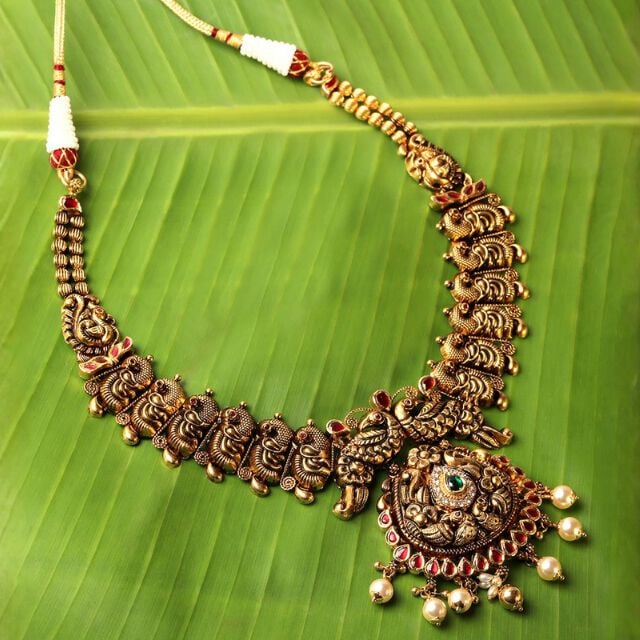
Have you ever looked at a piece of jewelry and felt as though it was whispering stories from a bygone era? If you’ve ever been to a traditional wedding in South India, you know exactly what I’m talking about. Walk into any traditional celebration in Southern India, and you will inevitably spot women wearing magnificent, deep red-gold ornaments featuring incredibly detailed figurines of deities, elegant swans, and blooming lotuses. These three-dimensional figures - tiny, perfect carvings of deities, temple arches, and little peacocks look so real you expect them to move.
This isn’t just decorative ornamentation, it is a profound art form that carries the spiritual essence of ancient India. When you start looking into heritage collections, you naturally end up asking, what is temple jewelry and why does it feel so heavy with history?
To truly appreciate these creations, one has to look beyond their physical beauty and explore a legacy that spans over a thousand years, deeply intertwined with the architectural marvels of the Chola, Pallava, and Pandya dynasties. Back then, these gold pieces weren't made for people at all. Master goldsmiths made them for one reason - to dress the stone idols inside the temples. Later on, classical dancers wore replicas on stage to tell epic stories through dance. Eventually, those designs traveled from the sacred stages straight into families, becoming the ultimate heirlooms passed down from mothers to daughters. So when you see someone wearing temple jewelry, they aren't just wearing an accessory. They’re carrying a thousand years of continuous human artistry.
The Level of Skill Behind the Metal
The main reason authentic Indian temple jewelry feels so heavy and real when you hold it is because a machine didn't touch it. There are no factory assembly lines or modern casting molds doing the work here. Every single line comes down to pure human patience.
The artisans use an old-school technique called repoussé. The craftsman takes a completely flat, thick sheet of pure gold and beats it from the back until a raised, three-dimensional shape pops out on the front. Once the outline of a deity or a bird shows up, they flip it over and get to work with tiny, hand-made chisels. They spend days carving out microscopic details such as the curve of a leaf, the expression on a face, or the individual feathers on a bird's wing. To make those details pop, they often set rubies and emeralds right into the gold, which gives temple jewelry gold that unmistakable royal, antique look. Because it's all done by eye and hand, no two pieces ever turn out identical. Every single ornament is its own standalone sculpture.
The Stories Hidden inside the Gold
Every single shape carved into these pieces means something. It’s never just random decoration, it’s more like a personal blessing you wear.
Take the figure of Goddess Lakshmi sitting on a lotus flower. You see her everywhere in bridal collections because she represents prosperity, grace, and good fortune for a new beginning. Then you have Lord Ganesha, who is carved into massive pendants as a symbol of protection and breaking through obstacles.
Even the nature motifs have a purpose. Peacocks stand for royal dignity, and blooming lotuses show resilience and purity because they grow beautifully out of muddy water. These symbols turn a necklace into something deeply personal, connecting you back to your roots every time you put it on.
Wearing Massive History in a Modern World
A lot of people assume these heavy, sculptural designs only belong in a glass case at a museum or strictly at a traditional wedding. While a full, layered set looks incredible on a bride, women today are completely breaking the rules on how to wear it.
You can take a single, beautifully detailed temple pendant, put it on a really clean, simple gold chain, and wear it with a solid-colored modern outfit or a sleek saree. The contrast is gorgeous as it lets the intricate metalwork do all the talking without looking over-the-top. Or you can take a pair of detailed temple jhumkas and use them to elevate a simple outfit for a formal dinner.
People are even changing up the metal tones today, looking at the soft warmth of rose gold for their everyday pieces, while keeping the traditional, deep yellow gold for their major heritage statements. The best part about this art form is that it doesn’t demand a specific look, it just adapts to your personal style.
When you invest in authentic jewelry, you are keeping a real human craft alive. Looking at the deep lines of a well-made piece means you’re looking at the exact same skills that filled royal treasuries centuries ago, kept alive for you to wear right now.

Search with an image and find the same or similar jewelry.
The file size should not exceed 6 MB
File size exceeds the limit