The Golden Years: A Parent’s Guide to Kids’ Gold Jewelry
The Golden Years: A Parent’s Guide to Kids’ Gold Jewelry
July 28, 2026
-
There’s something so nostalgic about a child’s first piece of gold. Maybe it’s a pair of tiny studs from a naming ceremony or a delicate bracelet that’s been passed down through three generations, gold has this beautiful way of holding onto memories. By 2026, though, shopping for kids' jewelry has changed. It isn't just about cute trinkets anymore, it’s a sophisticated mix of safety-first engineering, whimsical art, and deep-rooted tradition.
If you’re looking to buy something for a little one, it’s about more than just the sparkle. You really have to look at the nuances of metal purity, safety checks, and finding a style that can actually survive a day on the playground.
What are we actually calling "Kids’ Gold Jewelry"?
When parents ask, "what is kids jewelry?", the answer goes beyond aesthetics. True kids' jewelry isn't just an adult ring shrunk down to a smaller size. It’s built specifically for a child’s anatomy and their high-energy lifestyle. The best pieces are designed from the ground up with a focus on "biocompatibility", meaning they won't react with young skin, and mechanical safety.
Let’s Talk Purity: 14K vs. 18K
When it comes to gold for kids, there’s a sweet spot you may want to hit:
● 14K Gold: This is the industry workhorse. Since it's about 58.3% pure gold mixed with stronger alloys, it’s durable enough to handle scratches and bumps without bending out of shape.
● 18K Gold: This is 75% pure gold. If your child has particularly sensitive skin, 18k Gold jewelry is the one to go for. The higher gold content means there are fewer base metals in the mix, which significantly lowers the chance of a breakout or discomfort.
A note on 22k Gold jewelry and 24K: While higher purity is prized for its luster, 24K is actually too soft for a child and will bend or scratch the moment they start playing.
Why Quality is a Health Choice, Not Just a Luxury
Unlike "fashion" jewelry, which is often hiding traces of nickel, lead, or cadmium, real gold is naturally hypoallergenic. In 2026, global standards like ASTM F2923 are in place to strictly regulate toxic metals in children's products. Investing in real gold is really about peace of mind, you know you're avoiding materials that lead to skin rashes or more serious health risks.
The "Invisible" Safety Features
Before you fall in love with a design, check for these three non-negotiables:
- 1. Screw-Back Posts: Standard "friction" backs (the ones that just slide on) are a no-go for toddlers. They’re too easy to pull off and swallow. Screw-backs use a threaded post that locks the nut in place, so that earring isn't going anywhere.
- 2. A "High-Polish" Finish: Kids have much thinner, more delicate skin than we do. Quality jewelry goes through a high-polishing process to make sure there are no sharp prongs or jagged edges to snag on a sweater or scratch a cheek.
- 3. Breakaway Clasps: For necklaces, look for modern "breakaway" features or tiny jump rings. These are designed to pop open if the chain gets caught on something, which is a vital safety measure to prevent strangulation.
Styles We’re Loving Right Now
The 2026 trend is "Minimalist Maximalism", think tiny, safe pieces that are still bursting with personality. When exploring the different types of kids gold jewelry, a few favorites stand out:
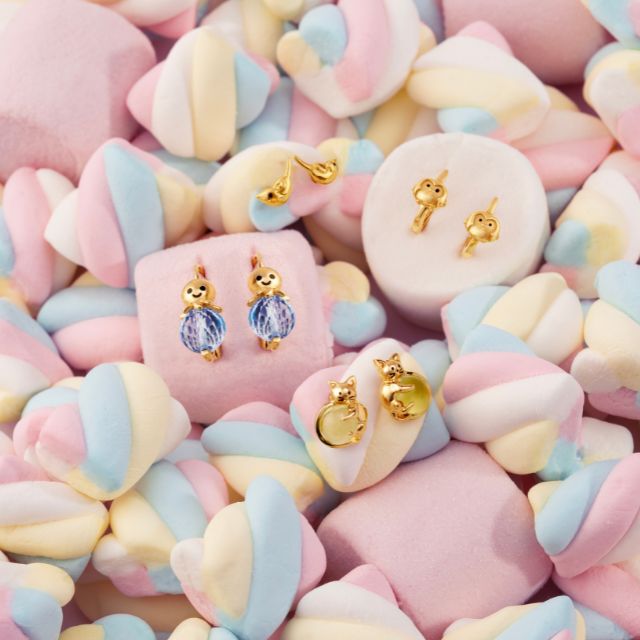
● The Classic Stud: Still the #1 choice. While pearls are timeless, we’re seeing a huge move toward nature-inspired designs, tiny gold honeybees, moons, or ladybugs.
● Personalized Keepsakes: Lightweight 14K gold nameplates or initial pendants are huge for birthdays. You might also consider a gold ring for kids featuring a small initial or birthstone, which they can tuck away in a memory box long after they've outgrown it.
● Kadas and Identity Bracelets: In many South Asian and Middle Eastern cultures, these sturdy gold bracelets are a staple. The modern 2026 versions often feature adjustable "sliders" so the bracelet grows with the child. You’ll also see a gold bangle for kids updated with "Nazariya" (evil eye) charms added for that extra layer of traditional protection.
● Cultural Medallions: Whether it’s a baptismal cross or an "Om" pendant, these remain essential. Modern designs keep them "low-profile" so they sit flat against the skin.
● Charm Anklets: Those tiny gold bells (Muvvalu) are making a big comeback. They’re beautiful, but they were also traditionally used by parents as a "low-tech" way to hear where a crawling baby was headed!
Choosing the Right Piece for Their Age
● Infants (0-2 years): Keep it simple and smooth. A plain gold bangle for kids or screw-back studs are best. Avoid anything with dangles or loose stones that could become a choking hazard.
● Toddlers (3-5 years): This is the fun phase! Enameled animals and whimsical shapes are always hits. Just ensure bracelets and other types of kids gold jewelry are snug enough not to fall off during a tantrum or a playdate.
● School-Age (6-12 years): They’re starting to want what the "grown-ups" have. Small gold "huggy" hoops, locket necklaces, and a sophisticated gold ring for kids are great ways to transition them into more mature jewelry.
How to Keep the Glow Alive
Kids are messy, but gold is tough.
● The Gentle Clean: All you need is warm water and a drop of dish soap. Let the piece soak for 10 minutes, and use a very soft toothbrush to get into the crevices.
● The Monthly "Check-Up": Once a month, just wiggle the stones and check the clasps. If anything feels loose or "mushy," take it to a pro.
● Safe Storage: Keep gold in a soft, fabric-lined box. It’s a soft metal, so it can actually be scratched by your own diamond rings if they’re all thrown in the same drawer.
More Than Just a Purchase
Buying gold for a child is rarely just a transaction, it’s an investment in their story. Whether you’re choosing 18K gold for its safety or a custom bracelet for a big milestone, you’re giving them something that holds its value, both in the bank and in their heart. When you choose quality, you’re buying something safe enough for today and precious enough for their future.

Search with an image and find the same or similar jewelry.
The file size should not exceed 6 MB
File size exceeds the limit