Polki Jewelry Modern Designs for Every Style
Polki Jewelry: Modern Designs for Every Style
November 19, 2025
-
Long before modern diamonds graced engagement rings, Polki jewelry shimmered in the royal courts of India, adorning queens and aristocrats with its raw, natural brilliance.
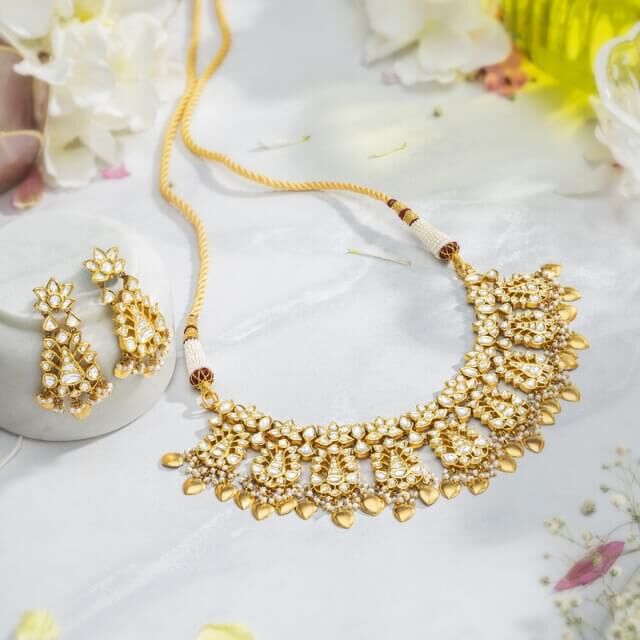
Unlike cut and polished stones, Polki diamond gold bangles and other types of jewelry are uncut and unrefined, retaining their organic sparkle, with each gem telling a story of timeless craftsmanship. Handcrafted in gold using ancient techniques, Polki pieces capture the grandeur of Mughal artistry and the soul of heritage jewelry.
If you’ve ever wondered what Polki diamonds are worth, their true value lies not only in their rarity but in their artistry, something Tanishq continues to celebrate through its authentic Polki creations.
What is Polki Jewelry?
Polki jewelry is a traditional form of Indian jewelry made with uncut, natural diamonds that retain their original sparkle and charm. Unlike modern diamonds, Polki stones are not lab-treated or machine-cut; their beauty lies in their raw, untouched form.
If you were wondering, ‘what are polki diamonds worth?’, these gems are usually set in 24K or 22K gold, often backed with fine foiling to enhance their brilliance and depth. It’s often confused with other traditional styles, but each has its own identity.
So, what is a Polki diamond? Well, Polki uses natural, uncut diamonds. And what is kundan polki? Kundan features refined glass stones, and Meenakari adds colorful enamel art to the design.
Every Polki gold necklace piece is handcrafted by skilled artisans, using time-honored techniques passed down through generations. Beyond its visual beauty, Polki jewelry carries deep emotional and heirloom value, treasured as a symbol of heritage and lasting elegance.
Different Types of Polki Jewelry
When exploring the world of Polki diamonds, it helps to understand that “what is the difference between Kundan and Polki” isn’t just about stones, it’s about materials, techniques, and heritage. Polki jewelry uses natural, uncut diamonds; Kundan typically involves glass or synthetic substitutes set in gold foil.
Below, we’ll look at some specific types of Polki, their distinctive features, how they’re best used in necklaces, earrings, rings, or bangles, and how to pick the right one for your style.
Kilwas Polki
Often one of the more accessible types, Kilwas Polki has a flat bottom and a dome-shaped top. Sometimes it may contain impurities or black spots, and it is thinner than higher grades.
These look best as modern Polki necklaces or lightweight earrings, offering the look of uncut diamonds at a more budget-friendly price. Because it can be thinner, it works well in designs that don’t require heavy stones.
Style tip: Layered Polki gold chains or chokers using Kilwas Polki can pair beautifully with festive outfits. It offers a flatter profile, keeping it comfortable while still regal.
Syndicate Polki
Syndicate Polki is widely regarded as one of the best grades. It features a thicker form, flat bottom, and faceted dome top, giving it a stronger luster and deeper presence.
These work best as bridal sets—full necklaces, heavy earrings, and statement rings. Because of its depth and quality, it makes more impact in pieces meant to shine.
Style tip: Choose Syndicate Polki when you want that “royal court” feel. This is a statement Polki necklace with matching earrings and a ring that will truly showcase the quality.
Zimbabwe Polki
Zimbabwe Polki refers to stones sourced (or graded) from Zimbabwe-type rough, which are often thick, high-quality, and untreated. It sits very high in quality among Polki types.
These are best for heirloom-worthy pieces. These are treasure sets that you’ll pass down. A full Polki set with Zimbabwe grade gems will remain timeless.
Style tip: For the bride who wants vintage grandeur, opt for a Zimbabwe Polki Rani Haar or necklace in a gold setting, perhaps paired with ruby or emerald accents for contrast.
LB Polki (Lightly Black)
LB stands for “Lightly Black,” and these Polki diamonds are thicker and darker, often used in open-setting jewelry.
These are best worn as bold rings or statement earrings where you want a strong presence but maybe don’t need the highest premium grade. The darker tone gives mood and character.
Style tip: A large Polki cocktail ring from LB Polki can be a stunning stand-alone piece, especially with a simpler outfit that lets the stone speak for itself.
LC Polki (Lightly Cream)
LC (Lightly Cream) Polki has a yellowish or creamish tinge, is thinner in profile, and is generally more budget-friendly than the top grades.
These work best as everyday Polki pieces, or for those starting their Polki collection. Think pendants, simpler earrings, or bangles.
Style tip: For festive wear, a Polki bangle set using LC Polki gives you that heritage look without going full heavy bridal. Mix it with pearls or coloured stones for a balanced look.
CVD Polki (Chemical Vapor Deposition or Lab-grown Polki)
CVD Polki refers to synthetic or lab-grown diamonds fashioned in the Polki style. These give a flat, unpolished look and are sometimes used in modern Polki and Kundan pieces.
These sets are the best for budget-conscious buyers who love the Polki aesthetic but want a more affordable option. These can work well for fashion pieces or less formal jewelry.
Style tip: Use CVD Polki in modern rings or earrings for daily wear, paired with gold or minimalist settings so that you can get Polki vibes without the full heirloom cost.
Conclusion
Understanding what is the difference between kundan and polki empowers you to choose with confidence.
Whether you are choosing a heavy bridal suite or a delicate everyday Polki pendant, matching the Polki type to the piece ensures you get both beauty and purpose. At Tanishq, each Polki type carries its character, and with this knowledge, you are ready to pick the one that aligns with your style, occasion, and legacy.

Search with an image and find the same or similar jewelry.
The file size should not exceed 6 MB
File size exceeds the limit