How Do You Know If Your Necklace Is Real Gold?
How Do You Know If Your Necklace Is Real Gold? 14k, 18k or 22k Gold Necklace Designs
July 28, 2026
-
Not every shimmery, shining necklace you see in a shop window is actually made of gold. It can be tricky to tell the difference! So, how do you know if your necklace is real gold? Luckily, there are a few ways to find out, ranging from simple tricks you can do right now to more advanced professional methods. In this guide, we’re going to walk through those techniques in detail. Plus, we’ll explore the popular gold necklace designs you’ll see in the market to help you pick the right one for your style.
Practical Ways to Identify Real Gold Jewelry
If you’re wondering about a piece in your collection, here are the most common methods people use to verify if their necklaces or rings are truly authentic:
Look for the Hallmarks
If the necklace you’ve bought has a hallmark on it, you can usually stop worrying about its purity right then and there. For example, those pure 24 karat coins or bars always come with 999 or 995 hallmarks, which just means they are 99.9% or 99.5% pure gold. If you are looking at 22k Gold jewelry, you’ll want to find the 916 hallmark, which tells you the piece is 91.6% gold. These marks are often engraved in tiny fonts that are hard to see with the naked eye, so don’t hesitate to use a magnifying glass to check your necklaces or rings.
The Water and Magnet Tests
Gold is heavy and it definitely isn't magnetic. You can try a "float test" by dropping your necklace into a container of water and if it stays on top, it’s definitely fake gold. Real gold will sink straight to the bottom every time. Also, try holding a strong magnet up to your jewelry. If the piece clicks onto the magnet, it’s a sign it isn't real, because gold doesn't have any magnetic properties at all.
The Skin or Rub Test
This is a classic: try rubbing the gold against your palm or another part of your body. When pure gold rubs against your skin, it doesn’t leave any marks or change your skin’s color. However, fake gold will often leave a dark mark or a stain behind.
Testing with Nitric Acid
If you want a more advanced check, you can use nitric acid to determine purity. You just place your necklace on a stainless steel plate and add a few drops of the acid. If the metal doesn't react at all, you know it’s made of pure gold. If it starts to fizz or change, it's likely made of something else.
Testing with Ceramic Tiles
Grab a ceramic tile that doesn't have a shiny or glazed surface. Gently rub your gold necklace against it and see what kind of mark it leaves. If you see a yellow streak, that’s a great sign the gold is real. But if the streak is a dark brown or black color, it’s a clear indicator that the gold is fake.
Choosing the Best Design for the Right Karat
It is important to remember that jewelry made from pure 24 karat gold is actually quite brittle and won't last very long if you wear it often. That’s why we usually use gold with a lower karat for jewelry. Most women gold necklace designs are crafted in 18k, 14k, or 22k gold. Here is how those different levels work with different styles:
Traditional 22k Designs
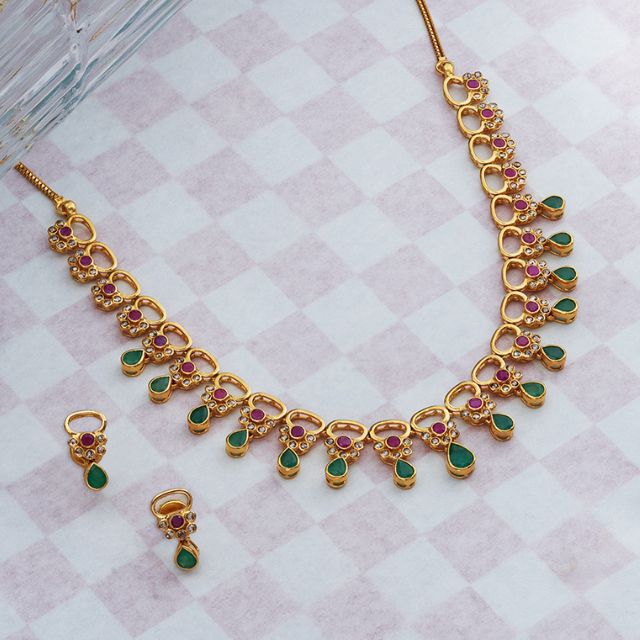
Most of our traditional favorites, like the Mangalsutra, Rani Haar, or Kundan sets, are made from 22k gold. Because the purity is high, it’s soft enough for craftsmen to engrave those incredibly intricate patterns. You’ll usually see beautiful motifs, temple designs, and traditional carvings on these 22k pieces.
18k Gold Necklace Designs
An 18k gold necklace is going to be more durable because it has a lower proportion of gold than a 22k piece. That bright yellow color you see in 22k gold becomes just a bit less intense here. This karat is the perfect choice for 18k Gold jewelry like chokers, diamond or gemstone studded necklaces, and those trendy two-layered chains.
14k Gold Necklace Designs
While 14k gold is incredibly durable, its tough and solid nature means it isn't really suitable for very fine or intricate carvings. This means a 14k gold necklace usually features more subtle or minimal designs. You’ll find a lot of floral patterns, geometric shapes, and sleek chains made from 14k gold. Plus, because there are more alloys mixed in, this is where you get great color variations like rose gold and white gold.
Tips for Picking Your Next 14k, 18k, or 22k Necklace
When you are trying to decide between a 22k, 18k, or 14k gold necklace, keep these helpful tips in mind:
● Go for a 14k gold piece if you’re looking for a necklace or chain you can wear every single day. It’s more durable and handles harsh weather or daily wear better than a 22 or 18k piece. Plus, these are usually a lot more budget-friendly.
● Try not to wear necklaces of different karats together at the same time. They can actually rub against each other, which can reduce the purity and quality of the higher karat gold over time.
● Stick with a 22k gold necklace for those traditional designs meant for weddings, engagements, or special celebrations. But if you prefer a design that has diamonds or gemstones, an 18k gold necklace is the way to go.
Conclusion
We hope this helps you feel more confident about how do you know if your necklace is real gold or not. Most of the time, you won’t have much to worry about as long as you’re buying from a recognized and reputable jewelry brand. Just remember to think about the occasion and how you plan to use the necklace when choosing between 22k, 18k, and 14k!

Search with an image and find the same or similar jewelry.
The file size should not exceed 6 MB
File size exceeds the limit